
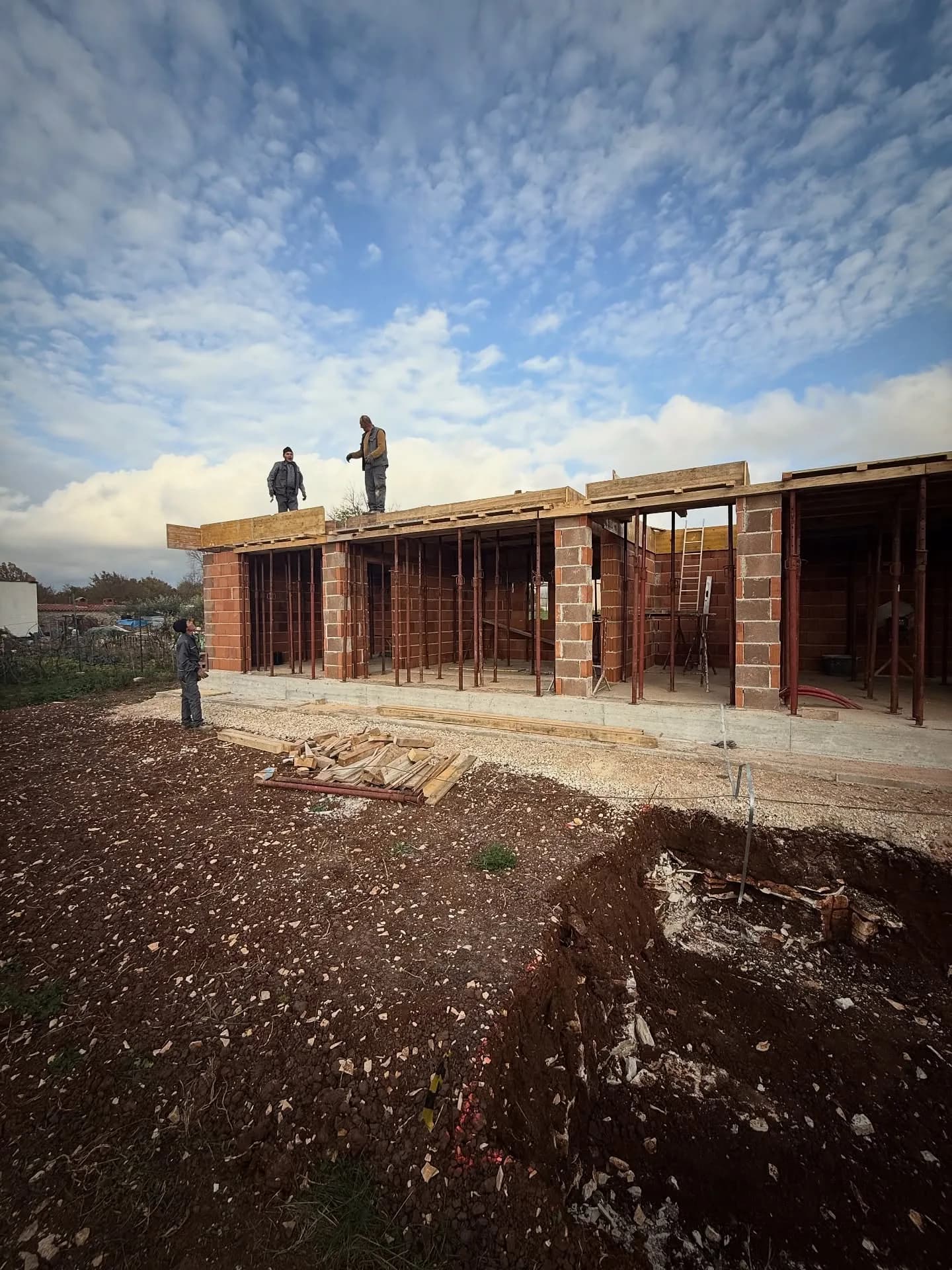
Building Reconstruction: From Existing Space to an Entirely New Function
Reconstructing a building is often more complex than new construction.
With a new building, the designer and contractor start from clearly defined conditions. With reconstruction, it is necessary to work with the existing structure, existing installations, and often incomplete documentation.
Every intervention can affect another part of the building.
That is why reconstruction requires a systematic approach, good planning, and an experienced contractor.
What Does Reconstruction Actually Mean?
Reconstruction can include very different types of work.
It may involve changing the internal layout, removing partition walls, opening new passageways, adding a floor, altering the roof, foundation remediation, replacing installations, or a complete change of use.
For this reason, there is no single universal approach.
Every building must be analysed individually.
A house built several decades ago will require a different approach from an old stone house or a commercial building being converted into residential space.
Structural Engineering Is One of the Most Important Elements
One of the biggest mistakes in reconstruction is the assumption that a wall is just a wall.
In an existing building, certain walls may have a key load-bearing function.
Removing or altering such an element without appropriate analysis can have serious consequences.
The same applies to enlarging openings, adding new floors, changing the roof, removing columns, changing loads, and interventions on foundations.
That is why structural analysis is a crucial part of serious reconstruction.
Installations Often Require Complete Renewal
In older buildings, the structure is not the only problem.
Electrical installations may be outdated. Water pipes may be deteriorated. The heating system may no longer be efficient. Air conditioning may require entirely new infrastructure.
If such problems are ignored, the new interior may look modern, but the building will still not be functional by contemporary standards.
Good reconstruction therefore looks at the building as a whole.
Hidden Problems Require Experience
One of the biggest differences between new construction and reconstruction is unpredictability.
During demolition or removal of existing elements, problems may appear that were not visible before work began.
For example:
- moisture behind a wall,
- damaged structure,
- inadequate foundations,
- old installations,
- unplanned previous interventions,
- improperly executed elements.
This means the contractor must know how to adapt the plan without losing control of the project.
Reconstruction Must Have Good Phased Organisation
A large reconstruction project is best divided into phases.
1. Building Analysis
Determining the existing condition, identifying problems, and defining reconstruction possibilities.
2. Design
Defining the future appearance and technical solutions.
3. Preparatory Work
Protecting the building, organising the construction site, and preparing the space for execution.
4. Demolition and Removal
Controlled removal of elements being replaced.
5. Structural Work
Execution of foundations, walls, slabs, openings, and other structural elements.
6. Installations
Execution of electrical, plumbing, heating, cooling, and other systems.
7. Finishing Work
Facade, floors, walls, joinery, sanitary fixtures, and final finishes.
8. Inspection and Handover
Checking the completed condition and closing out the project.
This approach enables better coordination of all participants.
Reconstruction Is Not Just a Technical Task
In many projects, the investor has an emotional connection to the existing building.
This is especially true of family homes, old stone houses, and properties that have belonged to a family for generations.
The goal is not always to create an entirely new building.
Sometimes the goal is to preserve what is valuable and improve what no longer meets today's needs.
It is precisely this combination that makes reconstruction particularly interesting.
When Is Reconstruction Better Than Demolition?
There is no single answer.
The decision depends on the condition of the structure, location, value of the building, architectural significance, cost of restoration, future use, and the possibilities for altering the existing building.
In some cases, reconstruction can be very rational because the investor gains a modern building on an existing location, while preserving valuable characteristics of the structure.
Cost Control in Reconstruction
Reconstruction costs can be harder to predict than new construction costs.
The reason is hidden problems.
That is why it is important to make as detailed an initial assessment as possible, define priorities, and allow room for unforeseen work.
Transparent communication between contractor and investor is especially important.
When a problem arises, the investor must receive a clear explanation of what happened, why intervention is necessary, and what impact it will have on the project.
Magnus Leader and Demanding Reconstructions
In reconstruction, there is no room for superficiality.
It is necessary to understand the building, anticipate risks, coordinate different types of work, and make technically sound decisions.
Magnus Leader bases its approach precisely on the combination of experience, organisation, and expertise required for demanding reconstructions and remediation works.
Reconstruction is not merely repairing an old building.
It is an opportunity for an existing structure to gain a new function, new value, and a new life.